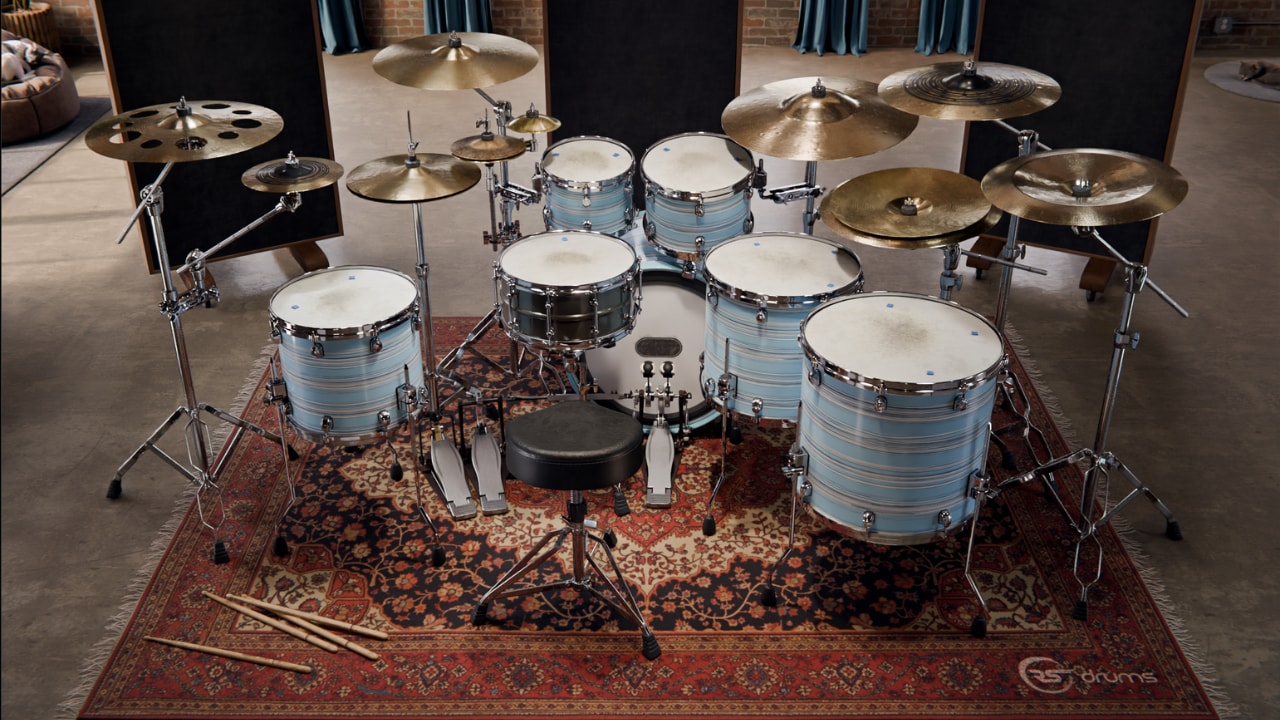
We're building the new standalone drum libraries for RS Drums, and the deeper we get into it, the more we appreciate just how much hides inside a serious drum instrument. From the outside, a drum library looks simple. You load it up, you get drums.
But the gap between "plays a drum sound" and "becomes the drums in your song" is enormous, and closing it is some of the most detailed work we do.
It helps to be clear about what these actually are. A modern drum library is a heavy production tool. So much of today's music, metal especially, is built from libraries like these alongside bass libraries, amp sims, and the processing that ties everything together, and the drums carry a huge amount of that weight. Most of the people reaching for a library are producers, guitarists, and songwriters who need drums for their music, and very often those drums end up on the final release. Everything about how you build the library has to honor that.
It starts with the gear
Long before any software exists, there's already a room full of choices. Which kick, which snares, which cymbals, how the kit is tuned, which microphones capture it and where they sit. Those decisions shape the entire character of the instrument. Every piece is recorded from several microphones at once, close mics, overheads, room mics, and more, all tracked together so they line up perfectly.
The depth of the sampling is planned well in advance. How many velocity layers each element needs, which articulations to capture, how wide a dynamic range to cover so the instrument feels expressive and authentic instead of static. That planning is what gives a library its realism down the line, and it's the part you can't shortcut.
Mix-readiness comes from real processing
A kit doesn't sound finished just because it was sampled well. The mix-ready, plug-and-play sound that modern production expects comes from processing built into the instrument: compression, EQ, transient shaping, saturation, envelopes, layered one-shots, dynamic EQ and multiband compression, all working together. That's how raw samples become a sound that drops into a dense, modern mix and immediately sits right.
The way we approach this is through mix presets. Someone can load a preset and land somewhere that's already most of the way there for their production. From there it's fully customizable. Every piece of that processing is open to shape, so a producer can take the sound exactly where their song needs it to go.
Routing that fits any session
Drums live and die by the mix, so routing every microphone independently is one of the most valuable things a library can offer. Tight, dry close mics, bright overheads, big crushed room mics, all of it can go wherever someone wants in their session. Good routing lets a producer treat the library like real multitracks rather than a locked stereo sound, and that's what makes one kit able to fit a hundred different songs.
Built for e-kits, not just programming
While most producers program their parts, a huge amount of our focus goes into making the library feel incredible for drummers playing it live on an electronic kit. That's a deep field on its own. Hi-hats need to be calibrated to feel natural against a drummer's actual hardware hi-hat setup. Cymbal mutes need adjustable decay so aftertouch responds the way a real player expects. The configuration has to adapt to the wide range of e-kits people own today, and players need to be able to record their MIDI performances straight into the instrument. Getting this right is what lets a drummer sit down and feel like they're playing their own kit, and it's something we put serious work into.
Powerful without being overwhelming
One of the things we care about most is how the library feels the moment you open it. A serious production tool can easily become intimidating, and we don't want that. Someone experienced should be able to dive in and unlock the full depth of the instrument, while someone newer should be able to open it up and get exactly the result they're after right away, whatever kind of production they're working on.
Striking that balance, powerful underneath and approachable on the surface, is genuinely difficult, and it's one we care deeply about getting right.
Why we love this work
A drum library might be one of the most demanding things you can build in this space, because it has to be technically deep and musically natural at the same time. It has to hold an enormous amount of detail under the hood while feeling effortless to use on top. That combination, complexity in service of something that feels simple and inspiring, is exactly the kind of challenge that gets us excited. Drum libraries are going to be a big part of what we build, and getting them right is worth every bit of the effort.