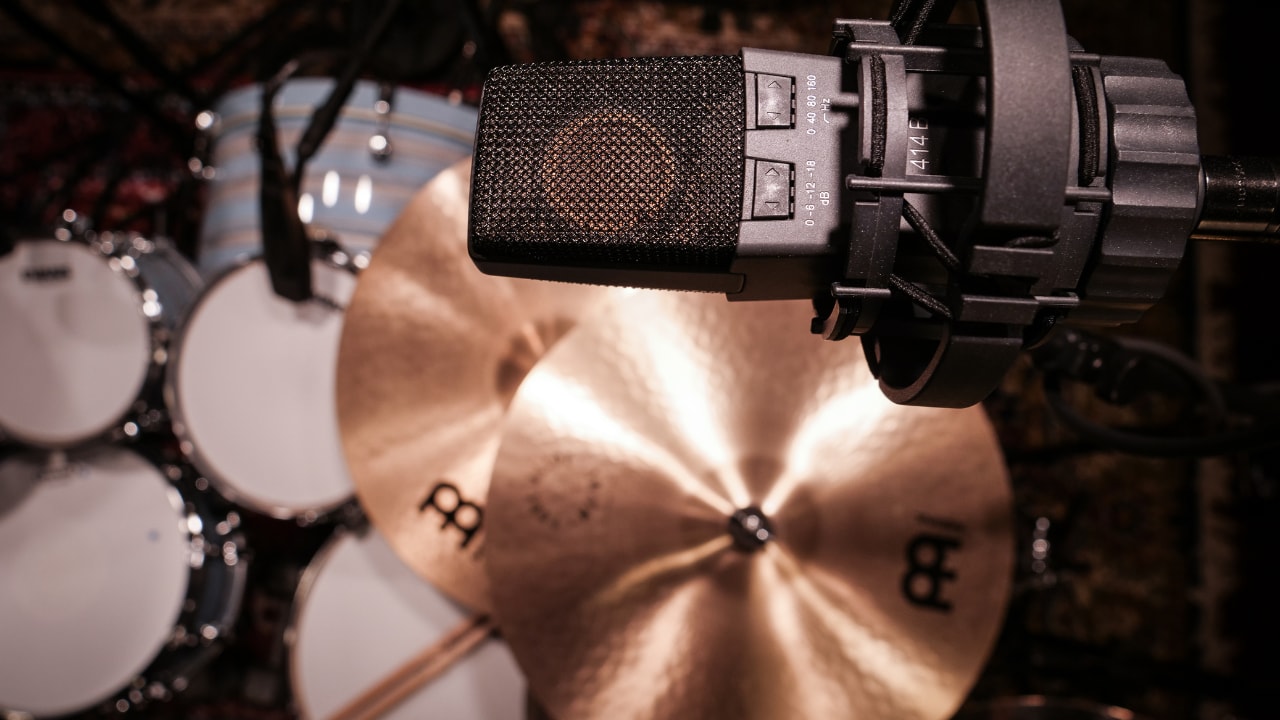
Compression is the effect most people understand last, even though they use it first. The controls feel abstract until you hear them on the right source, and there is no better teacher than drums. Drums are loud, punchy, and full of transients, so every move a compressor makes is obvious on them. If you want to really learn what these knobs do, put them on a drum kit and listen.
The four controls that matter
Threshold sets the level where compression kicks in. Ratio sets how hard it clamps down once it does. Those two decide how much. The two that decide how it feels are attack and release.
Attack is how quickly the compressor reacts once the signal crosses the threshold, and on drums it changes everything. A fast attack grabs the very front of a hit and tames it, which can make a kit sound smaller and more controlled. A slower attack lets the initial smack of the drum through before the compressor clamps down, so you keep the punch and only shape what comes after.
That single choice is the difference between a flat kit and one that hits you in the chest.
Release is how quickly it lets go, and it does more than you might expect. Set the release fast and the compressor recovers between hits, which lets the natural resonance and sustain of the shells come back into the sound, so the kit breathes and rings the way a real kit does. Set it too slow and the compressor never quite lets go, which can choke that resonance and flatten the life out of the drums. Release is really a sustain control in disguise.
Parallel compression, the drummer's secret weapon
Here’s the technique that makes all of this click. Instead of compressing your drums directly, you send a copy to a separate channel and absolutely crush it. Fast attack, high ratio, ten or more decibels of gain reduction, the kind of setting that sounds broken when you solo it. Then you blend that crushed copy quietly underneath the untouched drums. Experimentation is key here.
The dry drums keep their natural attack and dynamics. The smashed copy adds weight, density, and sustain underneath. You get punch and power at the same time, which direct compression alone struggles to give you. It’s one of the most reliable moves in any genre, and it teaches you to actually hear what extreme compression does.
Overheads, rooms, and glue
Compression on the wider drum sources is where character really shows up. On overheads, a gentle touch can pull the cymbals and the overall kit picture together without smearing the transients, while a heavier hand brings up the sense of a real space.
Room mics are where you can have fun and get aggressive. Crushing a room track hard and blending it in is one of the classic ways to make drums sound huge and alive, which is exactly what the Distressor’s famous Nuke mode was built to do on live room mics.
Then there’s the mix bus or the drum bus, where the legendary SSL G-Series bus compressor earns its reputation. Strapped across a mix, it makes everything sound bigger and more cohesive, the effect everyone calls glue, and SSL’s own plugin version of it is one of the best in the box. A classic starting point is a gentle 2:1 or 4:1 ratio with only a couple of decibels of gain reduction, letting it pull the whole picture together.
The part that shapes how we build
Spend enough time doing this and you notice something. The compressors people reach for are not chosen only for how cleanly they control dynamics. They’re chosen for the color and texture they add while they work. A certain style of compressor grabs fast and leaves a pleasing harmonic edge behind, and that edge is half the reason it sounds good. The Distressor is a perfect example. Its creator built it by taking what he loved about the classic compressors around him and combining those qualities into something with a character all its own.
That idea is exactly why, when we model a compressor, we care as much about its character as its curve. Controlling dynamics is the easy part to measure. The way a unit colors a drum while it clamps down is the hard part, and the part worth capturing.
The character is not a side effect. It’s what makes a compressor worth reaching for.