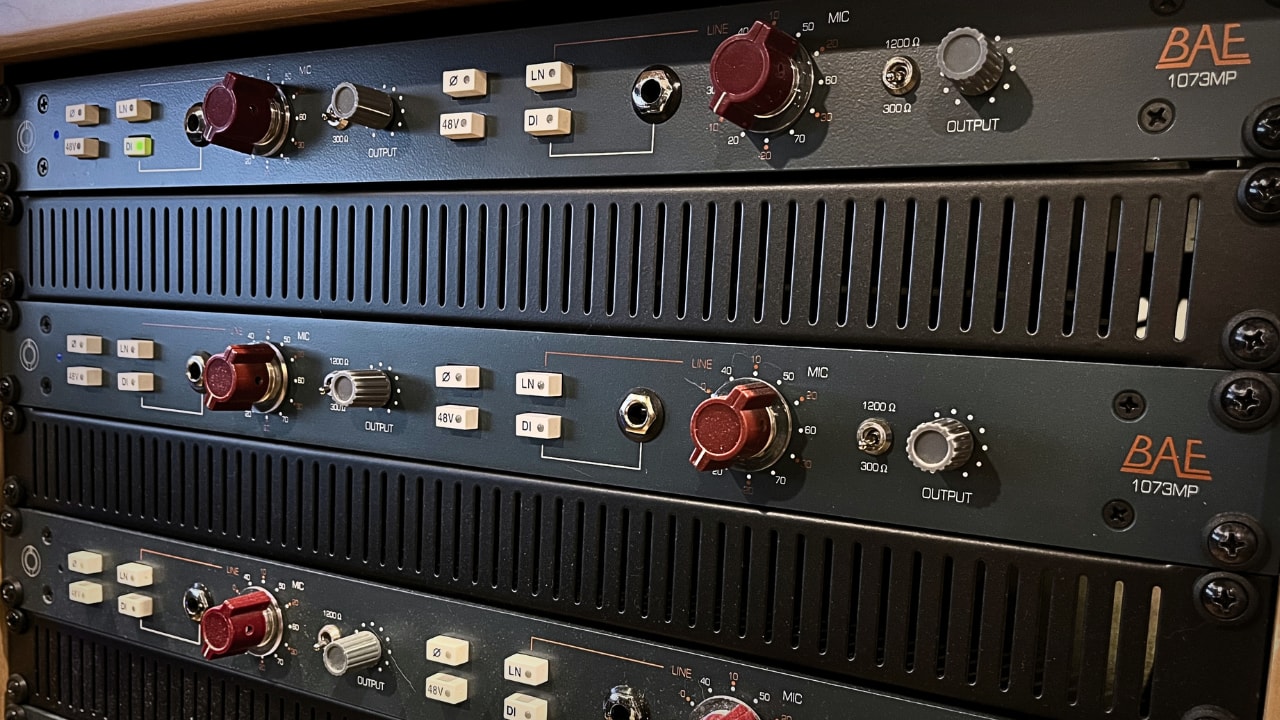
Saturation is one of those words that gets used constantly and explained rarely. People reach for it when a mix feels too clean, too digital, too flat. They add a little, and suddenly things sound warmer and more real.
But warmth is not magic. It’s harmonics, and once you understand what’s actually happening, you can use saturation on purpose, along with your ears, instead of relying on feel alone.
Feel still matters most. It just works a lot better when you also know what the effect is doing.
What saturation actually does to a signal
When you saturate a signal, you’re gently distorting it. Not the obvious kind that turns a clean guitar into a wall of fuzz, but a subtle version that adds new frequency content that was not there before. Those new frequencies are harmonics, mathematically related to the original sound, and our ears read them as richness. The same process softly rounds off the loudest peaks, which is why saturated audio often feels a little more controlled and a little more glued together.
That’s the secret behind the word analog. Analog hardware couldn’t help adding harmonics and gently clipping peaks, and that coloration is a big part of why so many records people love sound the way they do. So when a digital signal feels sterile, what it’s usually missing is exactly that harmonic content. Add it back tastefully and the sound feels like it passed through something real. This is also why transformer plugins like Kazrog True Iron, or the saturation modes built into compressors like FabFilter Pro-C, can make a flat track suddenly feel alive. They’re adding harmonic life, not just volume.
Where saturation earns its place in a mix
A few examples come up constantly. A touch of saturation on a bass guitar generates harmonics higher up the spectrum, which is how a bass can stay felt in the low end while still being clearly heard on phones and laptops that can’t reproduce the fundamental at all. On a drum bus, parallel saturation brings out the body of a snare and gives cymbals more weight without you having to push the level. On a vocal, a small amount of drive adds presence and that slightly forward quality, and because saturation softly tames peaks, it sometimes does the job you were about to hand to a second compressor.
The thread running through all of it is that saturation is rarely about making something sound distorted. It’s about adding the harmonic life that makes a sound feel finished.
Why this matters to us
Harmonics are the bridge between digital and analog, and that’s not a throwaway line for us. It’s the reason we model hardware the way we do. The character we want to capture lives in this harmonic behavior, in how a unit colors a signal while it works. Once you hear that harmonic content is what makes great gear sound great, you understand why we spend our time chasing character. Harmonics are a huge part of why certain sounds feel alive to us.